
His First Shave: A Little Facial Hair, a Big First
A gentle guide for parents on your son’s first shave: when to start, choosing simple tools, a short routine, pimples, small nicks and the thicker-hair myth.
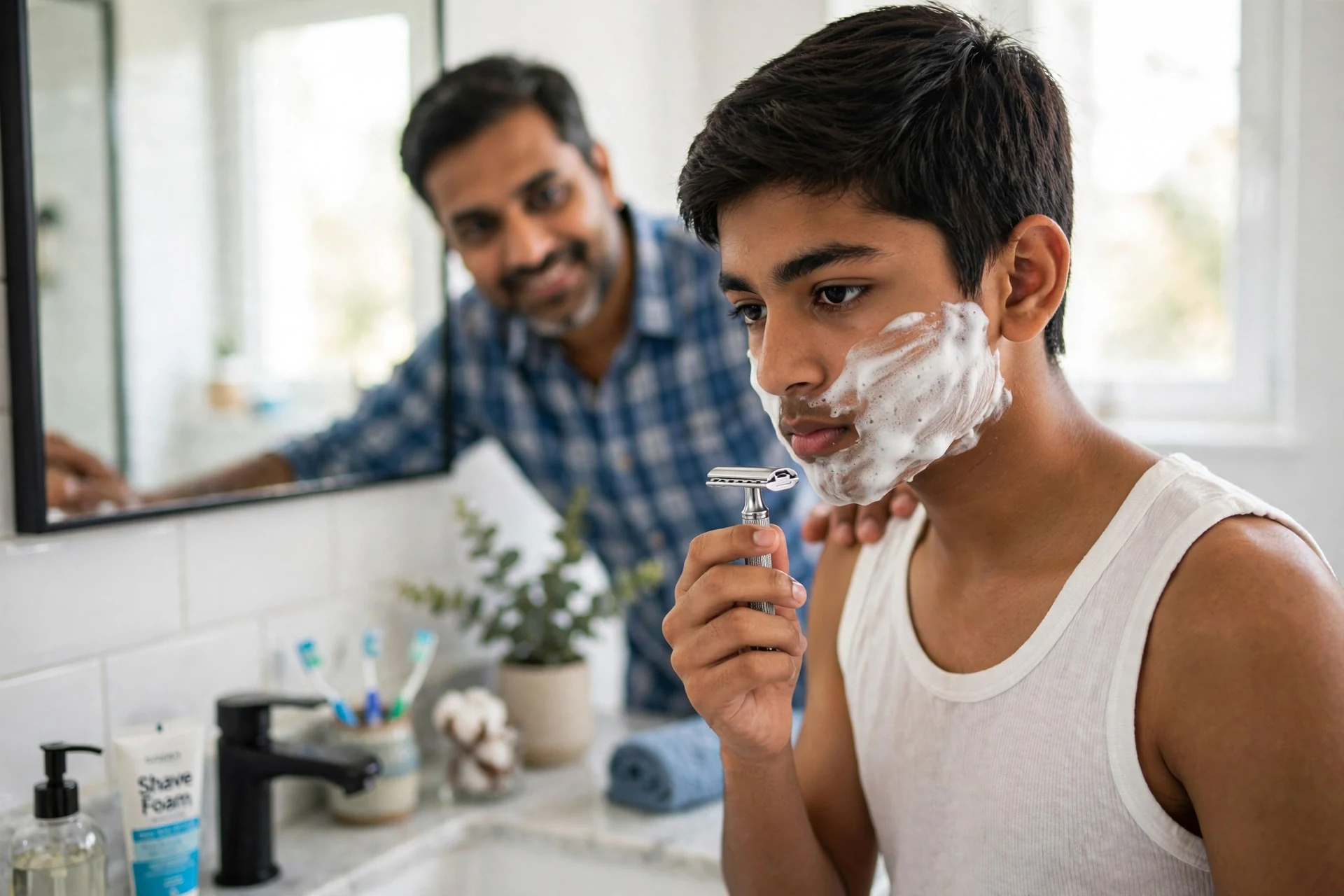
The bathroom mirror is getting a little more attention. A faint moustache has appeared, a few hairs have settled on his chin, and suddenly, getting ready takes longer than it used to.
You may barely notice the change. He probably knows exactly where every new hair is.
For some boys, the first shave is something to look forward to. For others, it brings questions they would rather quietly search on their phones. Will it hurt? What if they cut themselves? Should they shave because their friends have started?
As a parent, you can make this first feel comfortable and manageable. A little preparation, the right tools and room to learn can go a long way.
When is the right time to start?
There is no fixed birthday for a first shave. Facial hair develops at different times, and boys will feel differently about keeping or removing it. A faint upper lip does not automatically need a razor. Equally, if the hair is bothering him, it is worth taking his interest seriously.
Start with how he feels about it. Is he curious about shaving? Does he want to tidy up a few hairs? Has someone at school commented on his appearance?
That last question deserves particular care. Teasing can make a boy feel that something perfectly ordinary needs fixing immediately. Reassure him that facial hair is normal and that he can decide what he prefers.
Try to keep the family commentary gentle, too. A proud announcement about his “little moustache” may feel very different when you are the person wearing it.
Make room for a small, private first
Parents often recognise the milestone before their children are ready to celebrate it.
He may welcome help but dislike an audience. He may want a demonstration, then prefer to try alone. Ask before taking a photograph or sharing the moment with relatives.
A parent or trusted adult who shaves can explain the basics. If you have never shaved a face yourself, you can still help him choose suitable tools, read the instructions and set up a calm first attempt.
Choose a time when nobody is rushing. A quiet weekend morning gives him more room to learn than the ten minutes before the school bus arrives.
Choose something he can handle comfortably
The first purchase can be simple. He needs a tool he can control and clear instructions on how to use it.
An electric facial trimmer with a suitable guard may appeal if he wants to shorten the hair while leaving some visible. An electric shaver is another option for someone nervous about using an exposed blade. Check that the device is intended for facial hair, and follow its instructions for use and cleaning. Electric tools still need careful handling.
A manual razor can also work, provided he learns the technique and uses a clean, sharp blade. A dull blade can tug and irritate the skin.
Let him hold the handle before choosing. Something that feels secure in his hand is more useful than an impressive list of features on the packaging.
Give him his own equipment and a designated place to keep it. Sharing a bathroom need not mean sharing a razor.
Keep the first routine short
It is easy to turn a new grooming habit into a shelf full of products. Begin with the essentials and introduce them slowly.
For a manual shave, set out a clean razor, shaving cream or gel suitable for sensitive skin, a clean towel and a gentle moisturiser. For an electric device, follow the manufacturer’s directions: some are designed for dry use, while others can be used wet.
Explain the sequence before he begins. Knowing what comes next helps him concentrate on handling the tool.
Prepare the skin
For a manual shave, soften the facial hair with comfortably warm water. Shaving after a shower can help. Apply shaving cream or gel to the area he intends to shave, choosing a sensitive-skin formula if needed.
There is no need to cover his entire face if he only has a little hair above his lip. Keep the task manageable.
Show him the direction of growth
Before the razor touches his face, look at which way the hair lies. It may grow differently on the cheeks, chin and neck.
With a manual razor, use short, slow strokes in the direction of hair growth, with light pressure. Rinse the blade between strokes. Repeatedly working over one patch can leave skin irritated, so resist chasing every last hair.
A first attempt may be uneven. Let it be a first attempt.
Finish gently
Rinse away the remaining shaving cream and pat the skin dry. A gentle, fragrance-free moisturiser is a sensible finishing step. He does not need a strongly scented aftershave to make the experience feel complete.
Help him notice how his skin feels afterwards. If a product stings or leaves it uncomfortable, pause and reconsider that product before the next shave.
If he has pimples, take extra care
A boy’s first facial hair may arrive while he is already figuring out spots and oily skin. This can make shaving feel more complicated.
Teach him to avoid running a blade over raised or sore pimples. Pressing harder will not smooth them away and can damage the skin. Light pressure matters, and an electric option may suit some boys better. If the area is particularly sore, give shaving a break.
For a parent, this is also a good time to check expectations. He may be examining every bump and stray hair far more closely than anyone else is.
If shaving repeatedly causes painful bumps, persistent irritation or worsening acne, seek advice from a dermatologist rather than buying one more product and hoping it solves everything.
Explain what to do about a small nick
A tiny cut can look alarming during a first shave. Knowing what to do beforehand makes it easier to stay calm.
If he nicks himself, stop shaving and apply steady pressure with a clean cloth or gauze. Once the bleeding stops, gently clean the area with water. Get medical help if the bleeding will not stop or the cut is deep.
Avoid turning a minor mishap into a lecture. Help him work out whether he rushed, pressed too hard or struggled around a tricky area, then adjust next time.
Clear up the thicker-hair myth
Many families worry that the first shave will suddenly bring on a thicker beard.
Shaving does not change the thickness, colour or growth rate of hair. It cuts the hair at the surface, leaving a blunt tip that can feel coarser as it grows back. Facial hair may naturally become fuller as he grows, but shaving is not what causes that change.
This is useful reassurance for boys who want to try shaving but worry that they are making a permanent decision about their appearance.
Teach the habit of looking after his tools
Once the shaving is done, show him how to clean and store what he has used.
Rinse a manual razor thoroughly and let it dry somewhere away from a wet shower or sink. Replace blades regularly and sooner if they begin tugging or feel damaged. Clean electric equipment according to its instructions.
These small habits are part of learning to manage his own routine. Initially, he may need reminders. With practice, putting everything away can become as familiar as brushing his teeth.
Let confidence come with practice
After the first shave, resist inspecting his face for missed patches. Ask whether he felt comfortable and whether he needs help with anything next time.
He may want to shave again soon. He may decide that trimming suits him better. He may leave the whole thing alone for a while.
What matters is that he knows how to approach it safely and feels comfortable coming back with questions.
One day, shaving may become an ordinary few minutes in front of the mirror. For now, there is something quietly lovely about helping him learn—and knowing when to step back and let him finish getting ready.